
1
/
of
1
Sideoats Grama
Sideoats Grama
Regular price
$6.00 USD
Regular price
Sale price
$6.00 USD
Unit price
/
per
Couldn't load pickup availability
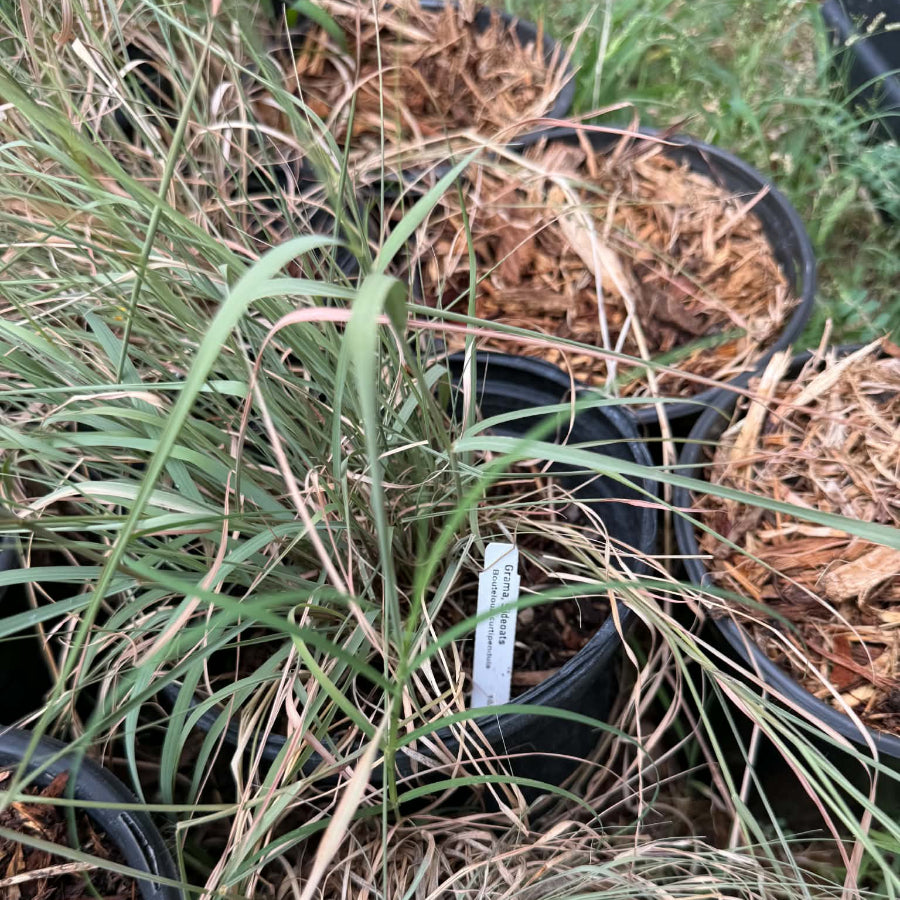
Sideoats Grama is a native North American bunchgrass prized for its distinctive nodding seed heads that resemble tiny oats dangling along the stem. This native perennial thrives in full sun to partial shade, making it adaptable across diverse garden settings.
Ecologically, Sideoats Grama stabilizes soil, reduces erosion, and provides essential habitat and food for native insects, birds, and wildlife. Its deep root system improves soil structure and water retention, benefiting the entire landscape ecosystem.
In your garden, this grass adds graceful movement, texture, and visual interest throughout the growing season. It requires minimal water once established, making it an excellent choice for water-conscious gardeners and naturalized landscapes. The foliage transitions beautifully through warm autumn tones before dormancy.
Historically, Indigenous peoples and early settlers harvested Sideoats Grama for livestock forage and thatch. Today, gardeners and land stewards use it to restore native prairie habitat, create pollinator-friendly spaces, and develop sustainable, low-maintenance landscapes that thrive without heavy watering or chemical inputs.
Share